Still Waiting…

Little 7.5-year-old Kristina waits for a family to come for her.
8-year-old Samantha needs a family to help her along in life.

i wrote about Samantha and Kristina back in August 2012. A pair of orphaned sisters who have some disabilities and some mental delays and have been transferred to an adult mental institution. i wrote about how they needed a mummy, a loving family and how they could reach full potential with a caring family supporting them.

i want to thank all the generous people who have contributed and helped to grow their adoption grant. They now have over US$6000 which is a good amount, although it isn’t even half of what is needed to pay for all the paperwork, flights, travel expenses, medical exams to get them into a forever family.

BUT… these sisters are still waiting… and the longer they wait, the more effects of institution-living they will suffer. i have read a heartbreaking list about the various effects of such baseline care (i can’t even really call it care.) which is most of the time all the institutions can afford. Here’s a bit about how Samantha and Kristina could be affected (beyond just their disabilities).

When a child has spent their entire lives inside any type of institute and has never had anyone work with them, read to them, take them anywhere or teach them the basics, that child may…

  • Come out not knowing ANYTHING.
  • Be unable to talk or have an extremely limited vocabulary.
  • Struggle to learn a new language.
  • Be academically and cognitively behind by years.
  • Have an extremely poor attention span and be unable to concentrate. (ADHD)
  • Be so overwhelmed by new information that they can only take in small bits at a time.
  • Not know what to do with pencils or crayons or paper.
  • Be extremely sensitive to the sights and sounds of the outside world.
  • Be terrified out in public to the point of frantic fighting.
  • Be unaware of dangers around them.
  • Be prone to wander and explore – even outdoors – even in the middle of the night.
  • Become obsessed with the electronics in the house (light switches, appliances, water faucets, outlets etc.)
  • Never have had their teeth brushed.
  • Never have had more than just a sponge bath.
  • Be terrified of water and getting a bath.
  • Be obsessed with water and want to get multiple baths during the day.
  • Choose to watch TV shows, read books or play with toys that are for much younger children.
  • Have a total lack of interest in playing with their peers.
  • Gravitate towards playing with much younger children.
  • Gravitate towards interacting with the adults or older people in their life.

When a child is physically disabled or has health issues, they are often unable to get the treatments and therapies they need. Because of this many children….

  • Are unable to walk.
  • Are unable to feed themselves.
  • Have enlarged tonsils from lack of treatment.
  • Have numerous and on-going ear infections and sinus infections.
  • May have hearing loss.
  • May have heart defects that are past the point of repair.
  • May have lung damage.
  • May have rotten teeth.
  • May have incorrect diagnoses and undiagnosed problems.
  • May have increased symptoms.

When a child has been transferred from their babyhouse to a mental institute that child may….

  • Regress.
  • Lose the ability to communicate.
  • Imitate the behaviors of the children around them.
  • Blank out and stare for long periods of time.
  • Rock, moan, groan.
  • Grind their teeth.
  • Wet or poop in their pants.
  • Withdraw and refuse all eye contact.
  • Become sensitive to touch.
  • Exhibit inappropriate sexual behaviors.
  • Lose the ability to walk.
  • Be terrified of the dark or being alone.
  • Struggle to communicate in their native language. (Some of the children are transferred to an institute where the child’s language or dialect is different. This often leads to loss of language skills in their native language.)
  • Struggle to learn a new language.
  • Have been drugged.

When a child has never had anyone listen to them, help them process their thoughts and feelings or help them understand the world, that child may…

  • Struggle to express their feelings or emotions.
  • Throw fits of rage over seemingly little incidences.
  • Withdraw, check out or blank out when feelings become too hard to handle.
  • Cry silent tears.
  • Rock back and forth when afraid.
  • Latch on to anyone who spends any time with them.
  • Talk incessantly.
  • Talk loudly.
  • Manipulate with their words – I love you if…
  • Want to touch everything and everyone in an inappropriate, excessive way.
  • Be unable to laugh or understand when something is funny.
  • Laugh at inappropriate times.
  • Laugh or respond inappropriately when told no or when reprimanded.
  • Cry when happy.
  • Hit themselves in the head, face or jaw when upset or angry at themselves or someone else.
  • Hit themselves when told no.
  • Be unable or afraid to ask for something they need or want.
  • Choose to steal, lie or go without before asking.
  • Repeat the same phrases or conversations over and over again.

The whole list is so very much longer. It is written by a dear orphan advocate who has adopted an amazing little boy 2 years ago and has seen first hand how institution-living greatly affects young minds. She writes:

It is not written to scare people away from adoption but instead to draw families in.  To break hearts.  To bear witness to what so many children are going through on a daily basis.

You can read the whole list here: Micah Six Eight: The List.

Now can you see why i am asking and asking, all the time, for you to help these orphans; to share their stories, to give towards their adoption, to pray for them?

Would you please help Samantha and Kristina find their forever families by sharing their stories far and wide?

Could you be that family who would love them for who they are? You can learn more about them by clicking on their names or pictures.

Would you please pray for their needs, daily and medical? Pray for their forever family to be brave and step forward for them.

Would you be able to help grow their adoption grant to ease the journey their forever family would have to bring them home? They have a donate button on their profile page here.

Thank you.

syc
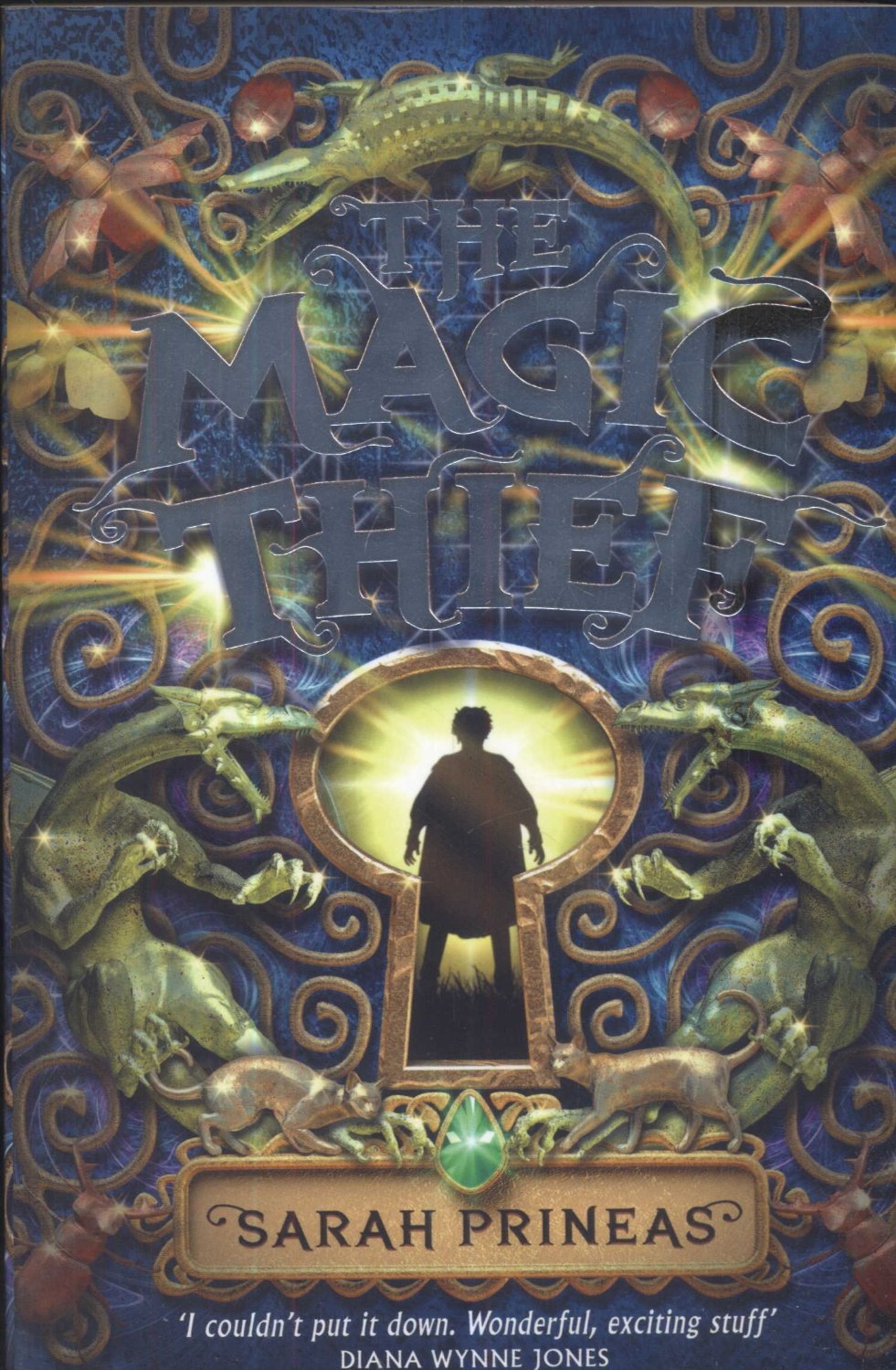
Book Review: The Magic Thief Trilogy by Sarah Prineas…

magicthief01_20130526a magicthief02_20130526b magicthief03_20130526ci have been waiting to write this review since i finished the last book, The Magic Thief Found, a couple of weeks ago. But things piled up and life got busy… anyhow, back to the books.

This trilogy consists of The Magic Thief, The Magic Thief Lost and The Magic Thief Found. i had bought The Magic Thief Found because the back of book blurb grabbed my attention and i liked the premise for the magic in the book. Then i found out it was a part of a trilogy so i waited till i got all 3 books before i started reading.

i read The Magic Thief and really enjoyed it, but i felt that it was really a stand-alone story and i didn’t feel drawn to carry on reading the second book immediately so i left it for a few months. Then i started reading The Magic Thief Lost about 6 weeks ago. I was so taken with the story i went on to read The Magic Thief Found immediately. Which for me is an unusual thing to do. If you have read my review of Inkheart, you would already know that i rarely read the same author consecutively.

i’m going to try not to reveal key plot points here so i’m going to be very vague about the storyline and plot. What i will do is tell you aspects of the whole trilogy which i did enjoy.

i loved Prineas’ idea of where magic comes from. i enjoyed her easy-to-read writing style and i was rooting for Conn, the main character, at every turn. Conn is the typical streetwise pickpocket urchin who, one night, picks the wrong pocket. He could have been killed but he wasn’t and thus begins his adventures as the apprentice of Nevery, the magician. His uncanny ability in magic and his understanding of magic in ways which no one can explain or much appreciate puts him in much danger.

The story pacing was good with humour and twists in the right places. i also like the maps, the recipes, the short descriptions of characters and places, but what i enjoyed doing was deciphering the secret messages throughout the book (usually put in at the end of letters or journal entries of the characters) using the Wellmet Runic Alphabet.

This isn’t written for adults per se, it is placed in the middle-grade category. So your 9+ year-olds and up would enjoy this. However, if you are looking for an easy, yet exciting read, with some fantasy thrown in, i would recommend The Magic Thief Trilogy.

syc

PS: i was searching Amazon for some pictures and came across this. So there is yet another book, Winterling, a spin-off from this trilogy. Maybe i will check it out soon 😉

Of Strings and Wood…

A little over 2 weeks ago, we had the unique opportunity to visit the only violin making school in Switzerland; the Swiss School of Violin Making in Brienz, Geigenbauschule Brienz. Thanks to our wonderful violin teacher who arranged the trip.

It is located in one of the most beautiful lakeside towns in Switzerland, in the region of Interlaken, the calm and ever quaint Brienz. i can’t think of a better place to have such a school. It’s neighbour is the Swiss School of Wood Sculpting/Carving, established in the late 1800s. So this place has a history of wood crafting.

Isn't the view amazing? Lake Brienz in the foreground, the mountains at the back.
Isn’t the view amazing? Lake Brienz in the foreground, the mountains at the back.

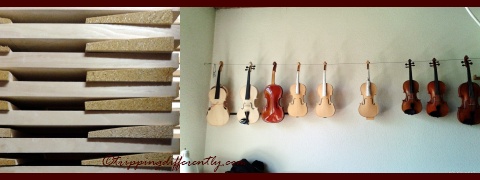
We got the grand tour from top down. They buy and store the wood used for violin-making in the attic. There were piles and piles of different wood; for violins’ bodies and necks, cellos’ bodies and necks, Maple, Spruce, Ebony (used to make the necks and are naturally black), Boxwood, Willow and Rosewood. He explained in detail about the grain and the age of the wood (they have wood from 1960s even!), but in German, so i missed a lot of the details, not to mention i had an 8-year-old constantly wanting to talk to me.

It is wonderful to think simple wood slats can become such beautiful musical instruments.
It is wonderful to think that simple wood slats can become such beautiful musical instruments.

Then we went down to the workshop. The school only takes in a maximum of 10 students, roughly 2 or 3 for each school year. It takes 4 years to study to become a violin-maker. You have to know sounds, acoustics, understand wood, learn to play the instrument (if you don’t already), treating the wood, lacquer and more. They make their own lacquer at this school!

Students hard at work. It takes them about 6 months to make a violin/viola and a year to make a cello.

We were there for a little over 2 hours and it was one of the more interesting tours i have taken in a while. We enjoyed it very much.

Left to Right: forming the shape (1 of 2 methods), parts made, lacquer drying...
Left to Right: forming the shape (1 of 2 methods), parts made, lacquer drying…

Now i want to just talk a little bit about the second concert we were privileged to take part in. It is part of 3 concerts of the 3 schools in our school circle. So on 15 June 2013, Wednesday, we played as part of a strings group at the Oberdorf concert.

Getting ready for rehearsal.

We had fun but it was quite a nervous time, at least for me. i made 2 mistakes during the 5-minute performance. Thank God we were in a group and no one really heard my mistakes, at least i hope not. It was also great that we were the first group to perform because we could then enjoy the rest of the concert without anxiety (again, i think it was just me.).

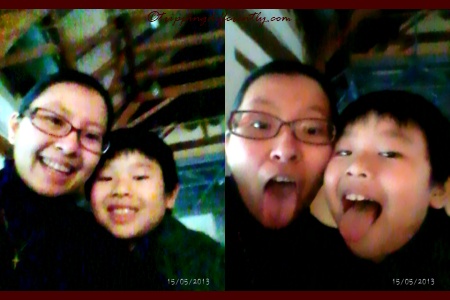
We have no pictures of ourselves performing as Walter was away and there was no one to take pictures of us. i did, however get pictures of us, doing silly faces waiting for the concert to start.

Aren't we silly?
Aren’t we silly? It was dark and i used the phone-camera, that’s why it’s so blurry.

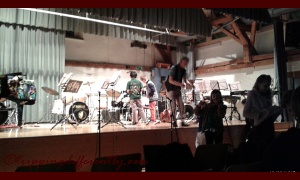
And here you can see 3 of Tobias’ favourite groups.

Top to Bottom: Saxaphones, Electric Guitar and Drums.
Top to Bottom: Saxophones, Electric Guitar and Drums.

The Drums group was really interesting to watch. They played an original composition by their teacher. You can see four drum sets and a xylophone. The girl on the xylophone played the whole time, keeping the melody going. The 14 drum students rotated between the 4 drum sets and played some amazing beats! i wished i had thought to record a video of them, but i was enjoying the music too much 😛

We have another 2 concerts to go… ooooh…

syc

PS: You can read about our very first recital before Christmas last year.