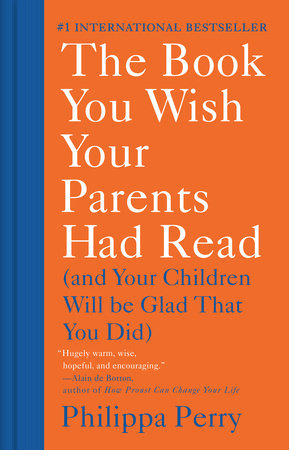
Oh my, it has been 7 months since my last book review… But it doesn’t mean I have not been reading. On the contrary, I have tried to read more than one book simultaneously. Actually, I tried to read 3 books at the same time. I had a devotional via personal stories type book which I read a few times a week before bed, as well as this big fantasy novel and a more serious book – the one I am reviewing today. However, my brain and life schedule just didn’t allow me to. I felt conflicted about which book I should read (between the fantasy and the serious one) each time I wanted to read during the day. In the end, I gave up trying to read both and stayed with the Philippa Perry one.
This is the first time I am reviewing a book which is non-fiction and I think it would fall under self-help or parenting book.
The subtitle for this book by Perry goes on to say “(and Your Children Will be Glad That You Did) – I hope so.
Perry focuses on the child-parent relationship and clearly states in the foreword, “This is not a straightforward parenting book. I’m not going to go into details about potty training or weaning. This book is about how we have relationships with our children, what gets in the way of a good connection and what can enhance it…” so there are no “tips, tricks or parenting hacks…”
I would go a bit further and say that the basic ideas and principles Perry highlights in this book can be applied to any relationship we have. There’s a lot of extending understanding and kindness, a lot of stating clearly what one’s feelings are and for the very young in our lives, we the adults, need to be naming feelings for them.
That said, a lot of what Perry recommends is quite contrary to what I have been brought up to believe about the parent-child relationship. But I can see her logic – it’s probably true that I grew-up under the “parent-as-doer” and “child-as-done-to” model which has been a model for many generations and I see it is especially so in Asian societies where age takes precedence over any other consideration; so what your parent says goes.
While I have grown up under the “doer-done-to” model, I consider myself as having had a good childhood and very loving parents who are supportive and always there for us. Looking at my family circumstances, both parents working full time to provide for us, there was perhaps not the luxury of time to apply all of Perry’s principles of defining ourselves, trying to understand the feelings behind each behaviour and brainstorming with the child to come to a solution. This collaborative approach takes time and I can see that there are family circumstances which may not allow for this approach.
But as parents, we all do our best. I certainly know my parents did their best and it was enough. I hope I have and continue to do my best. Perry is very encouraging and repeats many times that we all make mistakes and it’s not the error that is important; it is the making the repair that is crucial.
It took me a while to finish this book because I had to read, digest, reflect on each section in relation to my life, my parents, my child and my own feelings about it. While I may not agree with every single thing Perry wrote, I come away from this book with a better understanding of myself and with a sadness that there were some things I would have done differently if I had known. However, I also know that I did my best and have hope that it’s never too late for repair.
I would recommend any one who wants a better understanding of the relationships in our lives and how our parents relationship with us as children and as adults affects how we relate to our own child/ren and other people.
Have you read this book? What are your thoughts on it?
Happy Reading.
syc









 trippingdifferently